
- Quantum Environmental Testing -
CERTIFIED ASBESTOS, MOLD, and LEAD TESTING SERVICES
Servicing Southern Califorvia
- from Kern County to San Diego -
714-912-1252
Phase 1: EnviroImmunity Scan
Advanced Indoor Air Quality & Moisture Diagnostic
Our EnviroImmunity Scan (Phase 1) provides a rapid, non-invasive evaluation of your indoor environment. Designed specifically for at-risk individuals, this basic scan targets the core environmental drivers of microbial growth and respiratory stress. Our EnviroImmunity Scan Includes the following detailed analysis-
1. Moisture & Building Conditions
Why It Matters: Moisture drives 80% of microbial risk for immunocompromised individuals. Uncontrolled water intrusion creates an immediate breeding ground for fungal pathogens.
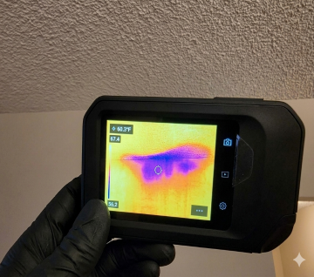
● Thermal Imaging: We use advanced infrared technology to locate hidden leaks behind walls and ceilings before visible mold forms.
● Moisture Mapping: Precision tracking of moisture migration through building materials.
● Temperature & Relative Humidity: Tracking real-time climate metrics to ensure conditions suppress fungal germination.
● Physical Integrity Checks: Comprehensive visual screening for staining, odors, warped materials, and bubbling paint.
Visual Evidence: Thermal Leak Detection
2. Air Quality Vitals (Fast Risk Indicators)
Why It Matters: Poor ventilation paired with elevated particulate matter creates a high-density zone for inhaled microbes, allergens, and toxic particles.
● CO2 Monitoring: Evaluates general room ventilation and fresh air exchange rates.
● CO Detection: Rules out toxic combustion byproducts in the breathing zone.
● PM10 & PM2.5 Screening: Measures respirable particle loads that threaten lung health.
(see EPA link for more details) https://www.epa.gov/pm-pollution/particulate-matter-pm-basics
● *VOC screening is NOT included in Phase 1. Mos-type VOC sensors (including those integrated into multifunction meters) are not sufficiently specific or defensible for clinical or environmental decision making, VOC testing is performed only in Phase 2 using PID, DNPH aldehydes, or TO-15 laboratory analysis.
Health Impact: Particle Pollution (Particulate Matter)
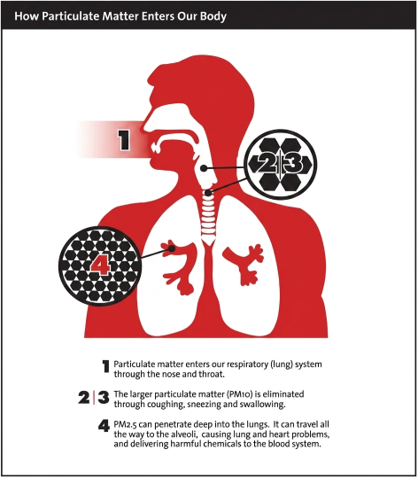
Particle pollution is made up of solid or liquid particles suspended in your air, including dust, dirt, soot, and smoke.
● PM10 (Larger Particles): Irritates the eyes, nose, and throat. Sources include road dust, construction sites, and agricultural settings.
● PM2.5 (Fine Particles): Highly dangerous. These tiny particles bypass natural respiratory filters, penetrating deep into the lungs and entering the bloodstream.
High-Risk Vulnerability:
While particle pollution affects everyone, it poses a severe, immediate threat to:
● Immunocompromised individuals
● People with lung diseases (Asthma, COPD)
● Individuals with heart disease or diabetes
● Older adults
Visual Guide: How Particulate Matter Enters Our Body
3. Microbiological Screening
Why It Matters: At-risk individuals require definitive data regarding airborne fungal burdens. Identifying baseline spore counts is critical to preventing exposure to opportunistic pathogens.
● Spore Trap Analysis: Includes 3 indoor air samples and 1 baseline outdoor sample to track structural amplification of mold.
● Targeted Surface Swabs / Tape Lifts: Conducted strictly in high-risk zones showing:
· Visible staining
· Musty odors
· Elevated moisture levels
· Suspect biological growth
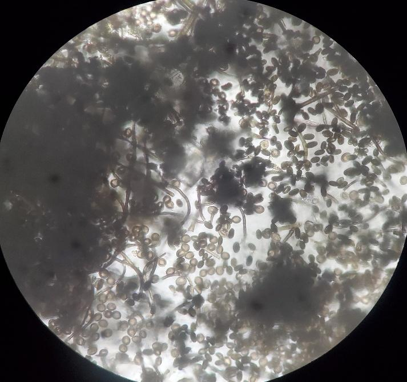
Microscope Analysis: Stachybotrys & Chaetomium Growth
Optional Add-ons (Not included in Base Phase 1):
● HERTSMI-2 (Dust DNA-5 Species screen) Used as a Targeted dust-borne mold burden screen when clinically indicated or when there is a history of water intrusion events.
● Heavy Metals (ICP-MS Dust Wipes) Used when there is a known or suspected source (pre-1978 paint, industrial fallout, soil tracking, occupational carry-home exposure) or when a clinician requests heavy metals screening.
4. HVAC & Filtration Check
Why It Matters: Your heating and cooling system acts as the primary exposure pathway. A neglected system actively distributes contaminants throughout the entire living space.
● Filter Diagnostics: Inspection of MERV ratings, physical integrity, and perimeter bypass seals.
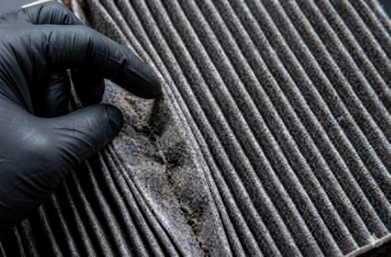
● Return Air Assessment: Screening for heavy dust loading and internal cleanliness.
● Coil Inspections: Verifying the absence of visible biological fouling on cooling coils.
● Airflow Patterns: Identifying stagnant rooms and obstructed return grilles.
System Risk Indicator: Severely Loaded Filtration System
Assessment Outcome & Next Steps
At the conclusion of Phase 1, our specialists answer one critical question:
"Is there evidence of environmental conditions that could harm an immunocompromised person?"
If NO: Maintenance & Yearly Monitoring is Recommended
If your environment passes, you will receive tailored ventilation and filtration optimization recommendations combined with a strategy for ongoing annual monitoring.
If YES: We recommend Escalation to Phase 2 Testing
Evidence of structural mold, active leaks, or hazardous particulate levels necessitates immediate Phase 2 Comprehensive Testing. This includes specialized air sampling (VOC’s), toxic mold species identification in settled dust, heavy metals testing, and targeted remediation protocols.
Proudly Serving The Following Counties: Los Angeles - Orange - San Fernando Valley -
- San Bernardino - Kern - Ventura - Riverside - San Diego
Two Quantum Environmental Testing Locations
Give us a call at: 714-386-7788 or write to us at: servicerequests@qetesting.com
Business Hours
- Mon - Fri
- -
- Sat - Sun
- Closed
